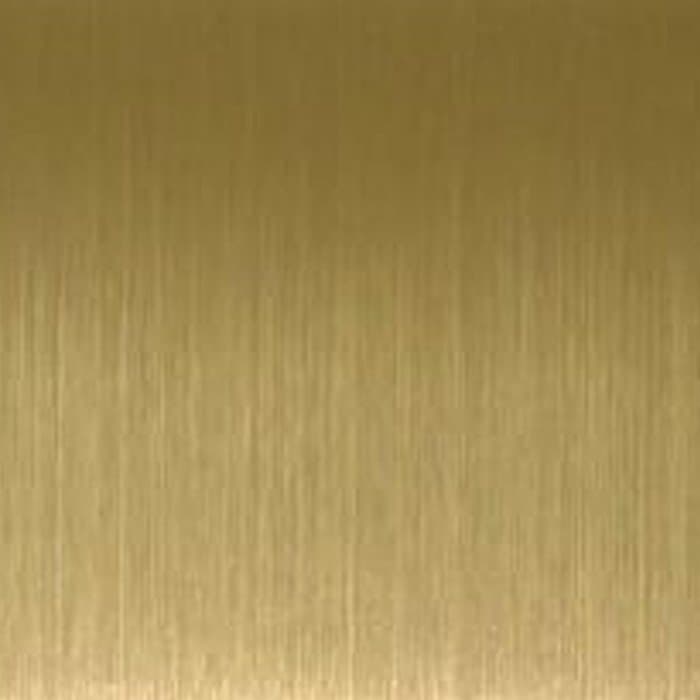
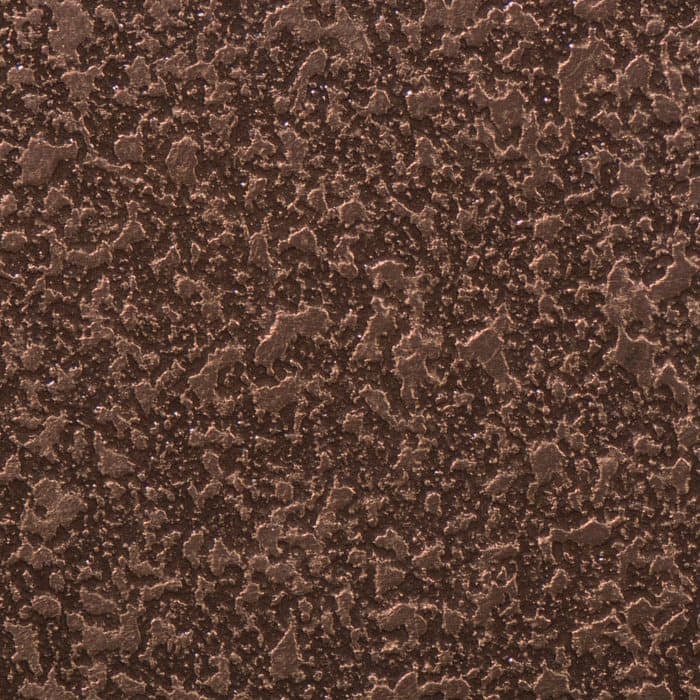
PVD is not paint. In a vacuum chamber, a metallic compound is deposited onto the stainless steel surface and bonds with it, so the colour is part of the metal rather than a layer on top of it. The base finish shows through — hairline, mirror, bead blast or vibration — so the same tone reads differently on each texture. Colours may include gold, champagne, bronze, copper, black and blue, confirmed against a physical sample. Because the coating line is in the same building as the cutting, folding and polishing, a panel can be cut, formed, polished and coated on one order.
What gets PVD-coated
- Lobbies and lift interiors — cladding, portals, car walls and handrails in a tone that has to match across every panel.
- Screens and facade elements — decorative screens and cladding where colour and a metallic surface are wanted together; exterior exposure is confirmed at enquiry.
- Doors, frames and hardware — entrance doors, frames, handles and trims in a colour that matches the rest of the interior.
- Furniture and fittings — counters, plinths, display frames and bathroom fittings in stainless steel with a decorative colour.
Why PVD
A painted or plated colour sits on the surface, and the surface is where the wear happens. PVD bonds the colour into the stainless steel, so it stays with the metal through handling, cleaning and use. The finish beneath still shows: the same bronze on a mirror sheet and on a hairline sheet are two different surfaces, which is why colour is judged on a physical sample of the finish you intend to use, never on a screen. Coating in-house means the base finish, the fabrication and the colour are one responsibility — the panel is not sent away and blamed on someone else if it comes back wrong.
Capacities
Machine limits by material, as published in the Hidayath Metal Industries company profile. Confirm your material, dimensions and quantity on enquiry.
Sheets
- Thickness up to 5 mm
- Width 1200 to 1500 mm
- Length up to 3000 mm
Square and rectangular tubes
- Wall thickness up to 5 mm
- Length up to 4000 mm
Round pipes
- Wall thickness up to 5 mm
- Diameter up to 254 mm (10 in)
- Length up to 4000 mm
From your sample to a coated panel
- Choose the base finish — hairline, mirror, bead blast or another texture; the coating takes its character from it.
- Approve a physical sample — the tone on your base finish, in your hand, before anything is produced.
- Fabricate and polish — the panels are cut, formed and finished to the sample.
- Coat and protect — the parts are coated in the chamber and film-protected for transport and installation.