Chemical & Petrochemical
Corrosion-resistant vessels, tanks and piping in stainless and higher alloys for process plants.
Process chemistry decides the metallurgy. Chlorides, acids, temperature and the way they combine in a given stream determine whether a vessel is built in 316L, in duplex or in a nickel alloy, and a wrong call shows up as pitting, cracking or a shortened turnaround interval. We fabricate vessels, tanks and piping for chemical and petrochemical plants in Saudi Arabia from our own stainless and alloy stock, with the material certificates carried through to the final documentation package.
Alloy selection for a given service is an engineering decision made against the process data. It is confirmed on enquiry, never assumed from a catalogue page, and the sections below explain what we build, how the grade conversation usually runs, and what to put in the enquiry so it comes back as a firm quotation.
What we fabricate for process plants
- Pressure vessels: reactors, columns, receivers, filters and heat-exchanger shells, fabricated and tested to the project code with the inspection hold points agreed beforehand.
- Storage tanks: shop-built tanks for acids, caustics, solvents, additives and intermediates, in stainless steel or higher alloy according to the product and its concentration.
- Process piping: spools, headers and manifolds welded to qualified procedures, back-purged where the grade demands it, and documented weld by weld.
- Skid packages: dosing, blending, sampling and transfer skids assembled and pressure-tested in the works.
- Passivation and pickling of fabricated stainless items, so the surface goes into service in the condition the grade was tested in.
How the grade conversation usually runs
For general chemical service with moderate chlorides, 316L is the working grade and 317L is the step up when a little more molybdenum buys the margin the stream needs. Where chlorides are high or stress corrosion cracking is a risk, duplex 2205 and super duplex 2507 combine higher strength with better pitting resistance, and 904L is the austenitic answer for sulphuric and phosphoric acid service.
At the top of the range sit the nickel alloys. Hastelloy C-276 is specified for hot, oxidising and reducing acid mixtures, Inconel 625 for high temperature with chlorides, Incoloy 825 for sulphuric and phosphoric service with chlorides present, and Monel 400 for hydrofluoric acid and caustic. Where the concern is heat rather than corrosion, 321 and 347 resist sensitisation in the welded condition and 310S serves furnace and hot-gas duty.
Each grade page lists the chemistry, the corrosion class, the density used for weight and the mechanical values with their standard, product form and condition. The PREN calculator ranks candidates by pitting resistance from their composition, and the thermal expansion calculator helps when a stainless line ties into carbon steel equipment and the growth on heat-up has to be allowed for.
Traceability from plate to nameplate
Chemical plant owners audit material harder than most, and the documentation package is built for that. Plate, pipe and fittings are received with mill test certificates, heat numbers are transferred to every cut part and recorded on the as-built drawing, and weld maps tie each joint to its procedure, welder and examination record. The article on 3.1 versus 3.2 certificates explains which level a specification is asking for and when independent witnessing is worth paying for.
Positive material identification on receipt, ferrite checks on duplex welds, hardness surveys and post-weld heat treatment are scoped from the specification and written into the inspection and test plan before fabrication starts, so nothing is argued about after the vessel is closed.
What a good enquiry contains
The process data sheet first: fluid, concentration, temperature, pressure, chlorides, pH and whether the service cycles. Then the mechanical data sheet, the nozzle schedule, the code and any owner specification that overrides it, and the documentation level. For piping, the line list, piping class and isometrics; for skids, the process and instrumentation diagram and the vendor data for mounted equipment. If the alloy is not yet fixed, say so and send the stream analysis, and we will propose one with the reasoning written down. When the package is ready, send the enquiry with the plant and unit named and the drawings attached. Fabrication happens in Jeddah and packages ship to the industrial cities on both coasts and inland.
Common questions
Can you recommend the alloy, or do we need to specify it?
Either. Where the owner's materials engineer has specified the grade, we fabricate to it. Where the choice is open, send the stream analysis and operating conditions and our engineers propose a grade with the reasoning written down, so your reviewer can accept or challenge it on the data. The final selection is always recorded on the drawing before fabrication.
Do you fabricate in nickel alloys as well as stainless steel?
Yes. Hastelloy, Inconel, Incoloy and Monel are fabricated to the same procedure-qualified welding regime as the stainless grades, with the filler, heat input and cleanliness controls each alloy needs. Material in these alloys is sourced against the enquiry with its certificates when the quantity does not justify holding it, and the certificates join the fabrication records.
What surface condition does a stainless vessel leave the works in?
Pickled and passivated as standard, so weld heat tint and any iron picked up in the shop are removed and the passive layer is re-formed before the vessel sees the process fluid. Where the specification asks for an internal polish or electropolish, that is agreed on the drawing and inspected before the vessel is closed and tested.
How is a dissimilar-metal joint between stainless piping and carbon steel equipment handled?
By design rather than by luck. The joint detail, the filler and the post-weld treatment are decided against the two grades and the operating temperature, and the difference in thermal growth is allowed for in the piping layout. The thermal expansion calculator gives a first estimate of that growth; the qualified procedure covers the rest.
What serves this industry
 01Pressure VesselsFabrication of pressure vessels to approved drawings and the codes named in your specification — with the documentation to prove it.View service
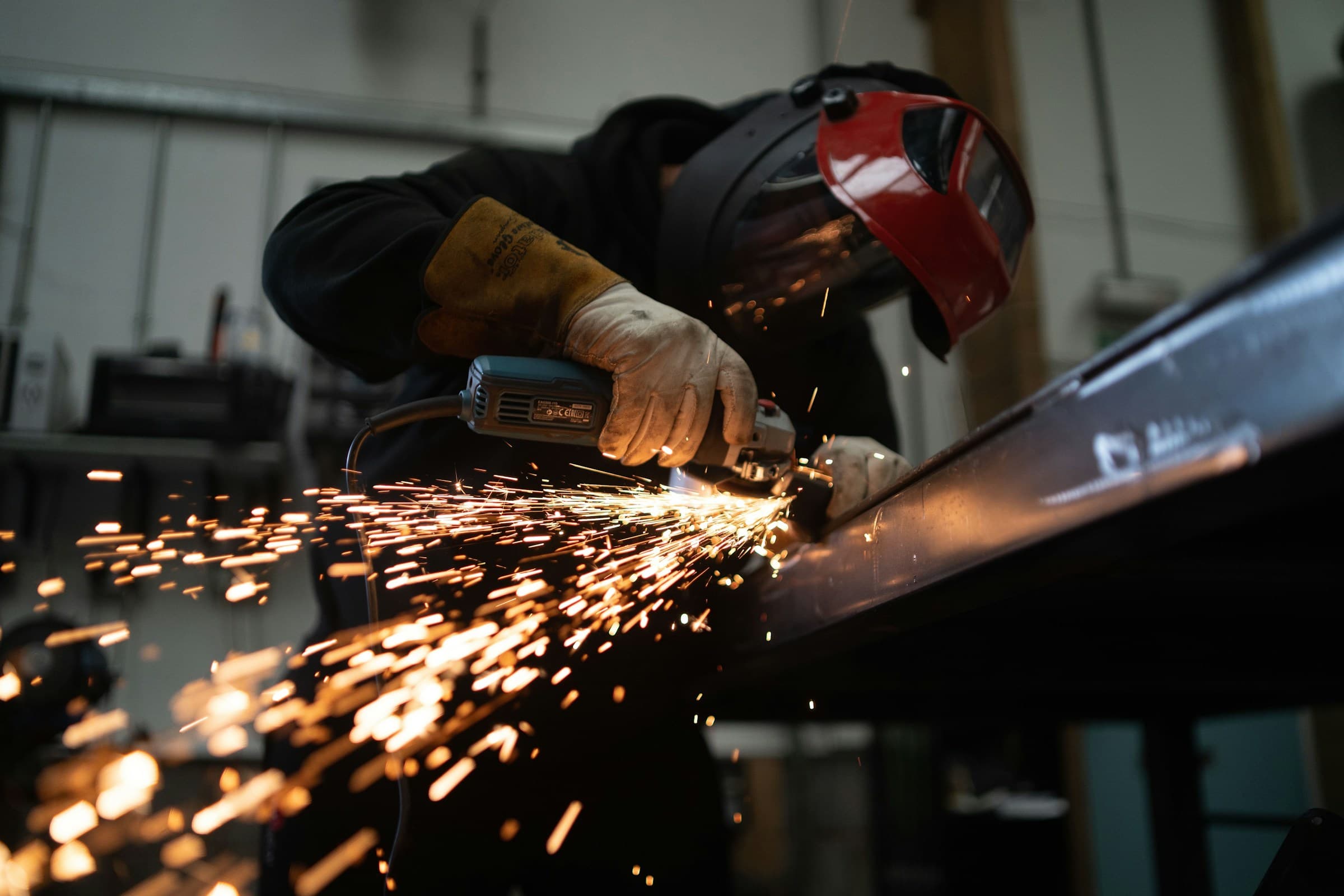 02Storage TanksShop-fabricated storage tanks in stainless and carbon steel, built to your drawings with material traceability throughout.View service
 03Skid PackagesStructural skid frames and mounted process packages — fabricated, assembled and documented as one deliverable.View service
- 04Pressure PipingPipe spool fabrication to your isometrics — qualified welding, weld traceability and NDE to the extent your specification requires.View service
Working in this industry?
Send the enquiry with your sector named — it reaches the division that serves it, with the context attached.